Related Post

Tampilkan postingan dengan label Global Warming. Tampilkan semua postingan

Species Biodiversity in Tropical Rainforest

Tropical rainforest is one of unique ecosystem in the world. The tropical rainforest is also home to many plants and animals, in fact more than plants and animals that we even know about. The plants found in the tropical rainforest produce much of the oxygen that is essential for our planet. In addition, many of the plants have unique healing properties against illness and disease.
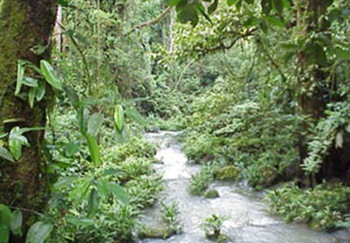
tropical rainforest, rainforest picture

Tropical rainforest is home to many rare animal species such as the Brazilian Tapir, found only in some areas of South America. Brazilian Tapir is a mammal which likes to live near water swimming and diving, feeding on leaves and small branches. Being naturally afraid of anything larger than itself it is harmless to man. It likes to live mainly near the lakes and ponds that are present in the tropical rainforest. Besides this there are many other unique animals that have made this beautiful rainforest their home.

There are also many varieties of birds to be found in the rainforest. One such bird is the Crested Guan, which can be found on the northern tip of South America. This bird lives in the tall trees of the rainforest and lives off of the seeds and fruits that are available on the floor of the tropical rainforest.

After animals and birds it is the turn of the reptiles. One unusual reptile species is the reptile called "Flying Dragon" found in the forests of Indonesia and the Philippines. It derives its name from the fact that it can fly from one tree to another with its skin flaps. It lives on insects and ants. This forest also has another use for these reptiles. At breeding time, these reptiles bury their eggs in the fertile soil of the rainforest to breed.

The Slow Loris is another animal that is unique to the tropical rainforest. This animal will spend most of his day in the tops of trees sleeping quietly. At night you'll find him feeding on shoots and leaves, small birds, bird's eggs, and insects that he finds on the ground. The Loris is a very slow mover but you'll rarely see him stumble as he makes his way from tree top to the forest floor. You might even see him hanging upside down from his feet.

You will also find numerous varieties of snakes in these rainforest. One such variety is called the Vine Snake. It gets its name from the fact this snake has only half inch diameter thickness. Another factor is its ability to swing from one side to another, like a vine in wind, when frightened for example in a situation when it is stalked by a predator. It is found mainly in central and northern South America. It feeds on lizards and small birds. These small birds are often stolen by these snakes from their nests. While the lizards are got either from the trees or running on the forest floor

Besides these the tropical rainforest is filled with numerous native animals. The tropical rainforest is a beautiful environment which at times could get harsh. As a result many of these animals have specific features to deal with and survive in these harsh conditions. The wonders of this rainforest, information about plants and animals continues to amaze us day by day as it is revealed.
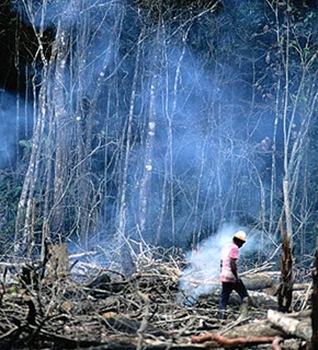
What Is Deforestation And What Can You Do? Be Proactive!

Spatial Info - Nowadays more and more natural disasters are happens. The human kind is feeling the anger of nature. Looks like this has led us to consciousness about the earth’s natural resources. Forests are the most affected ecosystem in the planet. This is probably due to the fact that basic necessities need trees as a raw material. The most appalling maybe is man’s desire for wider land areas, that made them cut off more and more trees in order to convert the area into a housing community, an agricultural land, and or a dump site. I just want to remain you that forest is not just only trees.

deforestation, reforestation, deforestation image

What Is The Definition of Deforestation?

Deforestation, by definition, can be means the cutting or removal of trees from woodlands or forests in order to convert the land into commercial or logging reasons or for whatever purpose it may serve them. Generally, deforestation denotes the extraction of trees without sufficient reforestation or effort to replant a tree elsewhere to replace the one that has been cut.

Since time immemorial, man has been making the environment adapt to the civilizations' growing needs. First it was cutting trees down to use for kindling, next it was for shelter, and then for paper and other products. Thousands of forests have been cleared all over the world to pave way for man’s innovations and spatial requirements. It seems that forests are present to cater to man’s needs and whims.

Raising Consciousness

It is human nature to be moved into action when our sense of well being becomes endangered. This is undoubtedly the reason why most people are becoming concerned over deforestation.

The easiest way to make people care is to emphasize the benefits of forests and woodland, and to show how its depletion will radically change our lives for the worst. First off, deforestation revolves around a number of issues but none as totally important as the two key subjects that we must be aware of: the primary concern is global warming or green house effect, the secondary matter is the question of whether the trees are utilized properly and if reforestation efforts are being made.

Trees absorb carbon dioxide, helping reduce the amount of carbon released into our atmosphere. Deforestation kills the trees that help prevent green house effect. Green house effect accounts for the Earth's over all temperature rises, thus causing bizarre weather patterns. That is why the frequency of droughts, floods, tidal waves, and other natural disasters have risen.

The second concern is that the trees being cleared to pave way for metropolis are simply slashed and burned. Aside from the excessive emission of carbon dioxide brought about by burning wood, there is the apprehension that the trees would have been put to better use providing shelter for the homeless, building materials or other useful undertakings. The subsequent effects are truly devastating. Who knew that deforestation can cause so much head ache? Yes, who knew? If only people have taken the time to inform themselves then they would have been able to make informed decisions and fight for what is right.

What Can You Do To Help?

Since you are know what is deforestation, it would be better if you start changing. Small steps make a huge difference especially when everyone is working at the same goal. You don’t have to be like a crazy person shouting at the streets and joining rallies. Begin by changing your attitude and outlook and then you will see that little things do make a difference. Start by conserving the most basic of household materials like paper towels, napkins and tissue papers. Recycling and knowing how to recycle materials will greatly help find a solution to green house emissions. Next is to be pro active and help educate other people by joining campaign groups who fight against deforestation. (studiospasial.net : from unknown source)

Get involved in Research on Global Warming

Research is constantly being done on global warming. The research is being done by studying statistics and by going directly to the source. Various scientists are coming up with different answers to the most basic questions about global warming.

Some scientists studying global warming in the Arctic have discovered thinning sea ice near the northern reaches of Alaska. The summer of 2007 showed the least sea ice since sea ice was first tracked in 1979. Scientists participating in the Woods Hole Oceanographic Institution's Gyre Exploration Project cruised aboard the Canadian Coast Guard's ship, the Icebreaker, to see the effects of global warming for themselves.

When they reached the area where ice would usually be the thickest and heaviest, the ship sailed right through. When they did see ice, it was in a state of disintegration because of global warming.  Most of the ice remaining was young ice, which is more vulnerable to thaw.  The scientists took their data home to analyze during the colder months.

Another group, with the Arctic Modeling Group and the IJIS Research Group, set sail along the Alaskan coast in the Chukchi Sea. Their mission was to study different variables of the ocean water that might affect phytoplankton. They found that the water was warmer than the satellite statistics.  The satellite showed 10 degrees Celsius, while their measurements showed 14 degrees Celsius. This is an example of global warming.

One study was done linking the Russian peat bogs with global warming. The bogs produce a large amount of methane gas. According to carbon dating that was done, this has been the case since the last ice age. Since methane is one of the greenhouse gases, this impacts global warming.

However, the studies also show that the peat bogs absorb carbon dioxide at an impressive rate.  They contain the largest carbon stores on the planet. If the peat bogs dry up due to global warming, they would release this carbon dioxide into the air. The trade-off of carbon dioxide for methane would not be a good one, since methane stays in the atmosphere a shorter time.

Researchers at Scripps Institution of Oceanography have been busy proving that humans bear some culpability for the climate change in the oceans. They have done this both by observing and noting evidence, and by constructing computer models.

The computer models are based on the evidence that they do have, so they are thought to be quite accurate. With all the data in place, the evidence seems to point to definite global warming events. It also makes it clear that humans have played a part in causing this phenomenon.

An MIT professor has studied the effects of warming waters on hurricanes over the last fifty years. He studied statistics from past storms and generated computer models to test his theory. His specialty is meteorology, so his take on global warming is of interest. He found that the hurricanes have indeed been getting stronger since 1970.

Research is important to the field of global warming studies. It is only by knowing the problem in precise detail that people can adequately confront it.

Global Warming is Affects the Ecosystems

Since global warming has such a profound impact on the earth's surface and oceans, it is not surprising that it affects the ecosystems of earth. Species depend on a fairly consistent habitat in which to live. Global warming changes habitats and endangers these species.

One of the habitats already being affected by global warming is the Polar Regions. Vast amounts of ice are melting at both poles. This makes it hard for the species in these regions to survive. For instance, polar bears' habitat is altered. Where once they could swim a short distance from ice floe to ice floe, that is no longer the case.

Now, the ice floes are so far apart that many polar bears drown trying to make the swim. According to the US Geological Survey, their numbers will decrease by half in the next forty or so years. The melting polar ice cap will be too much for most polar bears to survive. Global warming will eventually lead to their extinction if left unchecked.

Global warming is pushing a reported 2000 species toward the poles. The climate becomes warmer in the habitats the plants and animals are used to. They naturally gravitate towards a cooler climate that will match the earlier climate of the region they left. They were moving at a rate of 3.8 miles per decade.

Another ice habitat being ruined by global warming is the penguins' home in Antarctica. They have been declining in number rapidly for the last 25 years. In fact, in that amount of time, 33% of the penguins are gone. The global warming melting the ice has made their habitat inhospitable to them.

Global warming may soon make alpine meadows a thing of the past. Already, in Washington's Olympic Mountains, sub-alpine forests have come in and taken over where alpine meadows once lay. In the last 60 years, species in alpine areas have moved up the mountains at a rate of 20 feet per decade. This leaves little doubt that global warming is having an impact on alpine areas.

The health of sea creatures in their habitats is also being threatened by global warming. In California, sea life is moving northward. This is a behavior designed to keep the creatures at a temperature that is most like the one they are adapted to. They naturally do this as a means of survival. When all the water is too warm, they will have nowhere to go.

Other sea creatures are being put in danger of extinction because of global warming. This happens because the extra carbon dioxide in the air mixes with the ocean water. It changes the acidity of the water.

The sea plants and animals are then in an environment for which they are not suited. If this global warming goes on, many will not be able to survive. For example, 97% of the earth's coral reefs could disappear if there is a 3.6 degree Fahrenheit rise in temperature.

The destruction of ecosystems by global warming has begun. Since all the species are needed to support each other, the whole world will suffer when species are lost. Only a concerted effort on the parts of all human beings will help the situation.

Fighting Global Warming at Home

There are steps you can take to fight global warming in your home and car. You do not have to wait for the government or big businesses to do something about it. It is better to take the initiative and do your part.

In your home, you can begin by changing your light bulbs. You do not have to do it all at once. Every time you change a bulb, though, you can replace the old incandescent bulb with a compact fluorescent. Not only does this reduce greenhouse gases, it also saves you money in the long run.

It has always been wise to seal and insulate your home, just for comfort's sake. Now, it is even more important. You can stop your home from emitting greenhouse gases and contributing to global warming by doing this. If you have any doubts about where your home needs insulation, you can hire an energy auditor to help you decide.

You can reduce global warming by simply taking care of the cooling and heating equipment in your home. You can change filters and have the equipment cleaned. Most importantly of all, when the heater or air-conditioner needs to be replaced, get an efficient model that is big enough for your dwelling.

In fact, it makes sense to buy all your appliances with energy efficiency in mind. Energy Star is a rating system that is reserved for efficient products. Buying such products will help decrease global warming.

Recycling is one of the easiest ways to help reduce global warming. Everyone can do it with little effort. You can also further the process by using products that are made from recycled materials.

You can help reduce global warming in your lawn, too. For one thing, you can use a push mower instead of a power mower. Since a push mower uses no energy but your own, this is a great savings. Even if you do use a power mower, you can still help.  Use a mower that catches the grass clippings so you can mulch them.

As far as transportation, you can do so much more than buying a green car. You can drive it sensibly, with no rapid starts for instance, to help prevent global warming. If you keep your car well-maintained, it will be beneficial, too. Things like changing your oil and keeping your car tuned up can make a big difference in global warming.

Surprisingly, poorly inflated tires can lead to global warming. This happens because tires must have the proper amount of air in them for the car to reach maximum fuel efficiency.  The less efficient your car is, the more it adds to global warming.

The best way to slow global warming by the way you use your car, is to make as few trips as possible. Walk when you can. When you have to drive, combine as many errands into one trip as possible.

If you fight global warming in your home and your car, you can make a difference. Some basic changes can be easily made. If everyone makes these simple changes, it can have a powerful impact on global warming.

Global Warming and the Significance of Rising Water Temperatures

A part of the alarm that is being raised about global warming has to do with rising water temperatures, especially in the ocean. Scientists are studying warming waters all over the globe to determine the extent of the change.

The consequences of this global warming are far-reaching. One of the most devastating effects of global warming is that, as the ocean water warms, it impacts tropical storms.  Hurricanes that would have been category 3 storms in past years are now category 4 or above. This is because they are energized when they pick up the warmer ocean water.

In fact, there has been a significant increase in these higher intensity storms in the last 35 years. This could be due to global warming. In 2005, the Atlantic was bombarded with 27 tropical storms powerful enough to receive a name. 15 of them developed into hurricanes.

Five of these storms reached the force of category 4 hurricanes. Four of them actually became worse, at category five. Hurricane Katrina made a terrible mark on history in August of 2005. It became the costliest hurricane in American history. It was also one of most lethal.  Global warming has left destruction in the form of more intense hurricanes.

As global warming causes temperatures to rise in the oceans, glaciers and icecaps are melting more rapidly. One particular ice shelf in Antarctica, the northern section of the Larson B shelf, collapsed in recent years. Scientists got a rude awakening when they realized how fast the ice shelf could disintegrate.

The polar ice cap is disappearing at an astonishing rate as well. It is dissolving at 9% per decade. This aspect of global warming is a definite cause for alarm. In the last 40-50 years, the thickness of ice in the Arctic has decreased by 40%. The ice that is present on earth is beneficial to maintain the delicate balance of the environment.

Perennial sea ice in the Arctic has been receding as well. There was a record low in the square miles of this sea ice in 2005. Just two years later, in 2007, the record was broken with a half of a million square miles less perennial ice than in 2005. Global warming has truly had an impact on the sea ice of the Arctic. Some scientists predict that all the sea ice will be gone by 2040.

Global warming could also cause the sea level to rise as ice melts. When this happens, islands are lost and coastal communities are flooded. Various suggestions have been made about the levels that the water level could reach, anywhere from 10 to 23 inches by 2100.

Global warming has the potential to make the earth a very inhospitable place to live. Rising temperatures in the oceans' waters are a clear indication that the process has begun. With the melting of ice in the glaciers, icecaps, and on the sea, it is only a matter of time before global warming has much more harmful effects. It is up to the people of the world to do what they can to make the future look brighter.

Movies for Global Warming Education

It seems that people are coming from all directions to make movies about global warming. Many people are moved to educate people about the subject and want to reach the widest possible audience. Books do not hold the appeal they once did. Now, people want to sit down and watch a movie to understand subjects like global warming.

Although Al Gore has a book by the same name, most people know An Inconvenient Truth as a feature length documentary movie. The movie boils down to a power-point presentation that Gore has given many times on the subject of global warming. Al Gore simply presents facts in a low-key, personable way.  The film includes some biographical information about Al Gore, too.

The 60 Minutes documentary, The Age of Warming, which aired April 1, 2007, is a must-see for those interested in global warming. In it, correspondent Scott Pelley explores Antarctica to find evidence of global warming. There, Pelley finds that the Adelie and Chinstrap penguins are being endangered by loss of habitat. He also finds glaciers that are in the process of rapid melting into lakes.  It is an eye opener.

Some fictional movies have been made with the theme of global warming. One is The Day After Tomorrow, starring Dennis Quaid and Jake Gyllenhaal. While the science may not be precisely or even nearly right, the special effects are fantastic. It is a good old-fashioned disaster flick with all kinds of natural disasters.  Bring out the popcorn, but do not expect to be educated.

An Earth Story, starring Ross Gelbspan and John Hutchison is another of those documentary-type movies.  It tells the story about all those scary predictions of climate change due to global warming.  The sub-title is An Alternative to Extinction.  That alone should explain how dramatic this movie is.  The solutions to global warming are equally dramatic. 

Not exactly a traditional movie, Dr. Elisabet Sahtouris' Crisis as Opportunity: Living Better on a Hotter Planet is unique. Instead of being distraught and woeful, Sahtouris views global warming as a natural evolutionary process. She sees it as a beneficial challenge that will help people learn to live together as they never have before.

Energy Crossroads: A burning need to change course, is a documentary movie about the energy crisis. It deals with the amount of oil that will be left in the future and the different ways to overcome that crisis.  However, a good part of this movie is devoted to a study of how energy issues are tied to global warming. It points to global warming as one of the reasons humans need to make changes.

There is a set of movies called the Secrets of the Millennium. Probably the best of this series is the one with information on global warming.  It is titled Secrets of the Millennium: Man vs. Nature: Who Will Win?  It dramatically exposes humans' desires to control earth, while letting things get out of hand environmentally at the same time.

Many celebrities have made their own movies on global warming.  Some of them are not available for viewing yet, and some of them can be seen on the internet.  One example is global warming films by Leonardo DiCaprio that can be viewed on his website.  As the reality of global warming sets in, more movies will certainly deal with the subject.

The Kyoto Protocol and Global Warming

The Kyoto Protocol was set up in a session of the United Nations in Japan in the year 1997. This initiative was set forth to reduce harmful emissions and to lessen global warming. It was adopted and contains goals for emissions that are legally binding for the countries involved.

The aim of the Kyoto Protocol is to prevent countries from causing global warming through human activity. There are some natural forces that contribute to global warming. However, it is the disruption of the climate by humans that is most damaging. This is what is addressed in the Kyoto Protocol.

The developed countries of the world have made commitments to reducing emissions in a timely manner. They have target dates and set levels they are supposed to reach by those times.  There are six greenhouse gases that are meant to be reduced by 5% in the next few years. Three of these are carbon dioxide, methane, and nitrous oxide.  If these countries are successful, it will reduce global warming.

It is interesting that, while many countries have agreed to reduce emissions, some countries will be allowed to raise emissions. These countries are Norway, Australia, and Iceland.  These countries control global warming by keeping their increases to a certain level.

Other countries are asked to simply maintain the levels of emissions they already have. Countries such as Russia, Ukraine, and New Zealand do their part against global warming by maintaining the status quo.

The goals of the Kyoto Protocol to decrease global warming are supposed to be realized between the years 2008-2012. It seems that this will be a near impossibility at this point for many countries. The US especially is turning its back on the provisions of the Kyoto Protocol. The initiative is given lip service by the powers that be, but real progress has been slow coming.

One way developed countries can receive credit under the Kyoto protocol is to help others. If developed countries sponsor emissions reducing programs in developing countries, they receive credit for this. It shows their commitment to the reduction of global warming.

Yet, not all developed countries have adopted the Kyoto Protocol. One glaring example is the US. As of December 2006, the US was one of the 169 governments that had signed the agreement to cut down on global warming. However, it did not ratify the agreement, so the treaty has no power in the US. Another hold-out was Australia.

There were two conditions that needed to be met to put this treaty into full legal force. One was that 55 countries needed to sign up. That condition was met in 2002. In 2005, the other condition was met when 55% of the developed countries had joined the effort to stop global warming.

The Kyoto Protocol was designed to hold developed countries up to a high standard. Developed countries are not only expected to create ways to reduce global warming. They are also rewarded if they help other countries to do the same. When every developed country joins in the struggle to reduce global warming, the earth will reap the benefits.

How To Learn More About Global Warming

Are you concerned with global warming?  If you are, you are not alone.  While a lot of speculation and debate surrounds global warming, many are still concerned.  After all, if the predictions are right many coastal residents will be displaced, it will be easier for diseases to spread, and our economy can suffer a huge blow.

As concerning as global warming is, it is important to refocus on the debate that surrounds it.  Although you are able to find a large number of documentary movies, television programs, newscasts, and books on global warming, you will also find opposition.  There are many well known figures, which include politicians and even a few celebrities and scientists, who claim that global warming is nothing but a sham.  This opposition may cause some confusion.  If you are unsure what to believe about global warming, you will want to do your own research.

When looking to research global warming, you may first want to turn to the internet.  The internet is one of the best ways to do research as it is nice, easy, and convenient.  When using the internet, you may want to visit the online websites of global warming activists and watch groups.  With that in mind, you may also want to visit the websites of those who claim global warming is nothing but a myth, an untrue theory.  This will give you the opportunity to examine both sides of the debate.  While what you find will vary, you are likely to find websites, on both sides, that list statistics and facts supporting their viewpoints.  These websites can easily be found with a standard internet search.

As previously stated, many scientists, meteorologists, and computer generated models, predict that global warming can and will have a profound affect on our planet and the way that we humans live our lives.  If you are looking for more information on the dangers that surround global warming, such as the impact it will have on our future economy, you will also want to turn to the internet.  A standard internet search with the phrase “global warming dangers,” can provide you with detailed lists of exactly how global warming is predicted to change the earth, and not necessarily in a good way.

Another point of global warming that you may want to focus on is the myths that are associated with it.  As previously stated, many politicians and celebrities have thrown their support by global warming, as well as those who oppose it.  With such a hot topic, it is easy for the facts and statistics to get distorted.  A standard internet search with the phrase “global warming facts,” or “global warming myths,” can help you better understand global warming from all vantage points.  For example, one myth that surrounds global warming is the melting of glaciers.  Yes, global warming is causing glaciers and other ice masses to melt, but did you know that global warming isn’t the sole cause of this melting?

In addition to using the internet to research global warming, you can also turn to your television. As previously stated, many newscasts and television shows focus on global warming.  While not always true, you may find those programs that are featured on the Discovery Channel and the Weather Channel to be a little less biased as compared to some documentaries.  Speaking of documentaries, two well known documentaries that cover global warming and ones that you may find enlightening are Al Gore’s An Inconvenient Truth and Leonard DiCaprio’s 11th Hour.

There are also a number of global warming books available for sale.  These books are often scientific in nature and written by professionals in the field.  Whether you buy a book from one of your local book stores or if you borrow one from your local library, be sure to check the date, as you will want to make sure that all information is at least semi-recent and updated.

The IPCC Reports on Global Warming

The Intergovernmental Panel of Climate Change has issued its Fourth Assessment Report in 2007. This report shows the effects and predictions concerning the issues surrounding global warming. Due to the size of the report and the amount of information contained in it, it takes a good deal of study to thoroughly understand the entire document.

However, some points can be made about the IPCC report. Working Group I is a part of the IPCC that reported on its study of the Physical Science Basis of the report. This dealt with the observations of global warming and the current state of how the sciences study global warming.

Attention was given as to how much of the problem was due to human activity and how much to causes in nature. Then, this section of the report makes predictions of how the course of global warming will run in the future.

After being produced by over 600 writers from 40 countries, the report was reviewed by another 620. The resulting findings were that global warming was indeed happening, and that human activity accounted for most of the cause of global warming.

This report notes many climatic changes that are occurring due to global warming. Some of these are changes in the make-up of the atmosphere, warming of the earth, and changes in ice, snow and permafrost. Also included were notes about the different amounts of rainfall and flooding, along with the frequency of drought.

The severity of hurricanes was discussed.  It is stated that humans have brought on the global warming that has caused the extreme hurricanes, and that the 21st century will see even more of them. The portion of the study that blamed humans was a result of expert opinions more than a product of research.

Different factors were discussed that could cause global warming or cooling. The current era was defined as starting in 1750. In the current era, the sun has radiated more intense heat, human activities have raised the temperature, and greenhouse gases have increased rapidly.

Different models were given of the course global warming would take in the next century. The models were run using different scenarios. They all turned out somewhat different.  However, they all indicated significant global warming.

The rises of temperature and of sea levels were explored fully. All the different models based on different scenarios were run to determine the numbers for these aspects of global warming. The prediction was that these levels would continue to rise for 1000 years, until all the excess greenhouse gases could be removed from the atmosphere.

Working Group II was involved with determining the Impacts, Adaptation, and Vulnerability surrounding global warming. Working Group III had the task of determining what would be the best Mitigation of Climate Change. This part of the report gave recommendations to world leaders on the subject of global warming initiatives.

The IPCC's report is a lengthy study into the nature of global warming. It covers the past, the current situation, and predictions about the future. Then, it proceeds to discuss ways to curb global warming. It is an important document, and it should be read by anyone interested in global warming.